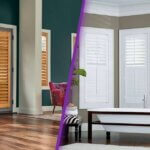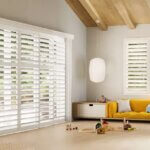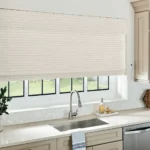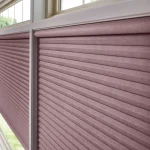
Choosing between wood vs. faux wood shutters can feel deceptively simple—until you start thinking about humidity, long-term durability, and how each option will actually live in your space. Both materials offer timeless style, solid light control, and the architectural presence homeowners love in plantation shutters. But the “better” choice depends less on trends and more on how your home functions day to day.
For homeowners across the South Denver area, climate swings, strong sun, and moisture-prone rooms can quietly influence how shutters perform over time. Below, we’ll break down the real differences—without hype—so you can decide what fits your home best.
TL;DR
- Wood shutters deliver unmatched warmth, authentic grain, and long-term home value in controlled environments.
- Faux wood shutters shine in moisture-heavy spaces thanks to warp resistance and easy maintenance.
- Cost, weight, finish options, and room placement matter more than brand names.
- The “better” shutter is the one matched to your home’s conditions—not just its style.
Understanding the Basics: What Sets These Shutters Apart?
What Are Wood Shutters?
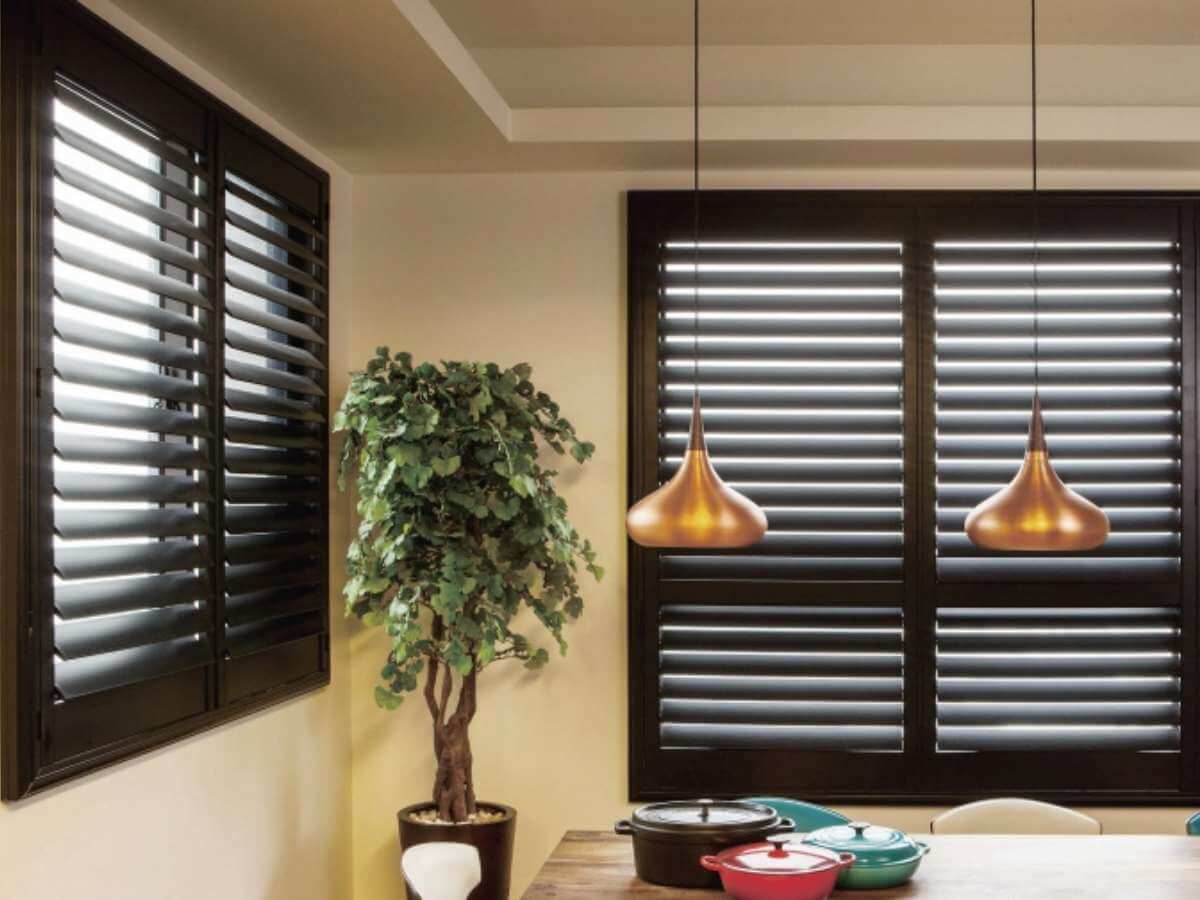
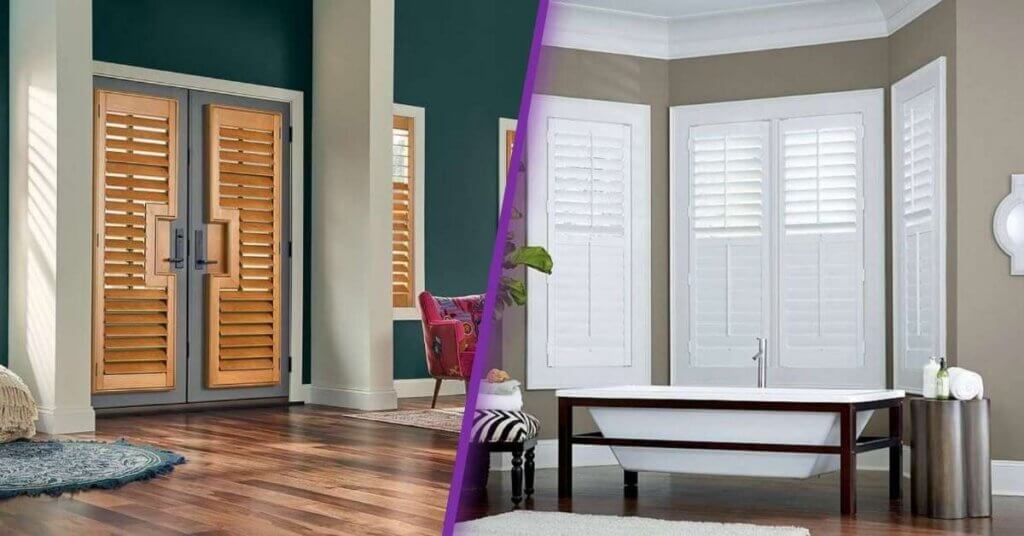
Wood shutters are crafted from solid hardwoods and finished with either paint or stain. Their natural grain and depth make them a favorite in living rooms, offices, and primary bedrooms where aesthetics and resale appeal matter most.
What Are Faux Wood Shutters?
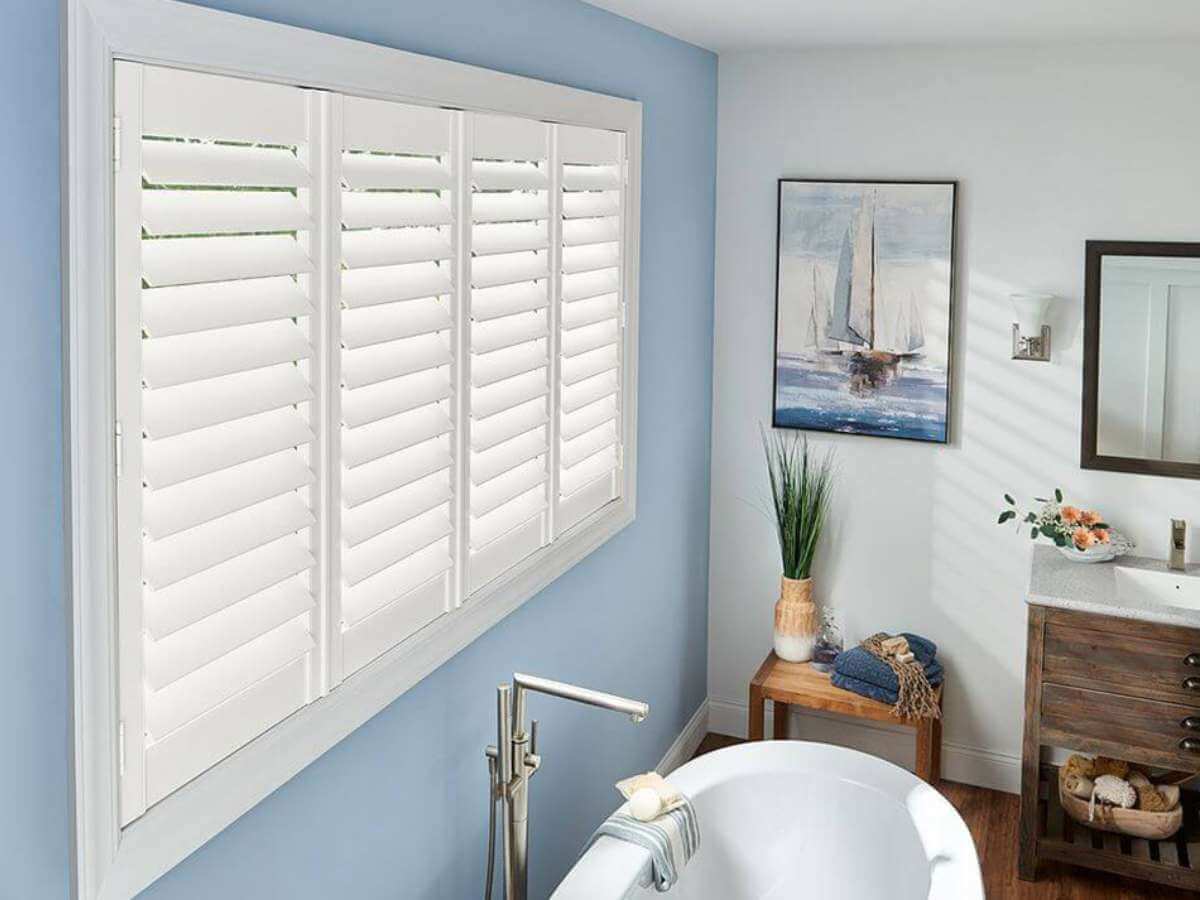
Faux wood shutters are engineered from composite or PVC-based materials designed to mimic wood’s appearance while improving moisture resistance and stability. They’re commonly chosen for bathroom shutters, kitchen windows, and homes with fluctuating humidity.
Aesthetic Appeal: Real Grain vs. Reliable Consistency
Wood Shutters: Natural Character
If visual depth matters most, real wood stands out. Each panel carries its own wood grain texture, giving spaces a layered, organic feel that pairs well with hardwood floors and custom millwork.
Why homeowners choose wood for looks:
- Authentic grain and tonal variation
- Rich stains that deepen over time
- A handcrafted feel that enhances home value
Faux Wood Shutters: Clean & Consistent
Faux wood offers a more uniform appearance. Painted finishes stay consistent from panel to panel, which some homeowners prefer in modern or transitional interiors.
Where faux wood shines visually:
- Crisp white finishes
- Uniform louvers and tilt bars
- Seamless coordination across multiple rooms
Durability & Longevity: How Each Material Holds Up
Warp Resistance & Humidity
Humidity is where the difference becomes practical. Wood can expand or contract in damp environments, while faux wood is designed to resist moisture-related changes.
In high-humidity areas:
- Faux wood maintains shape and alignment
- Louvers open and close smoothly over time
- Less risk of swelling or joint stress
Sun Damage & Daily Use
Direct sunlight affects both materials, but in different ways:
- Wood may gradually soften in tone
- Faux wood resists fading and surface cracking
Neither option is fragile—but placement matters.
Room-by-Room Performance: Matching Material to Space
Best Rooms for Wood Shutters
- Living rooms
- Dining rooms
- Home offices
- Primary bedrooms
from wood’s warmth without constant exposure to moisture.
Best Rooms for Faux Wood Shutters
- Bathrooms
- Kitchens
- Laundry rooms
- Sunrooms
Here, moisture resistance and easy cleaning outweigh subtle texture differences.
Energy Efficiency & Insulation
Both materials improve insulation by creating a barrier between the window and interior space. Properly fitted custom shutters help reduce drafts and manage heat gain.
Key takeaway:
Energy efficiency depends more on fit and installation than on whether shutters are wood or faux wood.
Cost Comparison: Upfront vs. Long-Term Value
Wood Shutters
- Higher upfront investment
- Strong resale appeal
- Often viewed as a premium architectural feature
Faux Wood Shutters
- More budget-friendly initially
- Excellent longevity in demanding spaces
- Lower maintenance costs over time
Neither option is “cheap”—they simply allocate value differently.
Weight, Installation & Hardware
Wood shutters are lighter, which can matter for larger windows or specialty shapes. Faux wood shutters are heavier but engineered to support wide spans with reinforced frames.
Installation considerations include:
- Louver size
- Frame depth
- Tilt bar placement
- Mounting style
Professional installation ensures smooth operation regardless of material.
Maintenance & Daily Care
Wood Shutters
- Occasional dusting
- Gentle cleaners only
- Avoid prolonged moisture exposure
Faux Wood Shutters
- Wipe clean with a damp cloth
- No special cleaners required
- Ideal for busy households
If low maintenance ranks high on your list, faux wood often feels easier to live with.
Painting vs. Staining: Finish Flexibility
Wood shutters can be painted or stained, offering long-term design flexibility if your style evolves. Faux wood shutters are typically painted only—but the finish remains stable for years without refinishing.
Wood vs. Faux Wood Shutters: Side-by-Side Comparison Table
Feature | Wood Shutters | Faux Wood Shutters |
Moisture Resistance | Moderate | High |
Warp Resistance | Depends on environment | Excellent |
Weight | Lighter | Heavier |
Finish Options | Paint or stain | Paint only |
Maintenance | Moderate | Low |
Best Rooms | Living areas | Kitchens & baths |
Frequently Asked Questions about Wood and Faux Wood Shutters
1. Do faux wood shutters feel plastic up close?
Modern faux wood shutters use textured finishes that closely resemble painted wood, especially from normal viewing distances.
2. Are faux wood shutters suitable for large windows?
Yes. Reinforced frames support wide spans effectively, making them a practical option for larger openings.
3. Can wood shutters be refinished later?
In many cases, yes. Wood shutters can be repainted or restained, depending on their original finish.
4. Which option lasts longer overall?
Longevity depends on environment. Faux wood often outlasts wood in humid spaces, while wood performs exceptionally well in controlled interiors.
5. Do shutters affect home value?
Both materials add value, but wood shutters tend to carry stronger appeal in resale listings due to their premium perception.
Final Takeaways
- Choose wood shutters for warmth, authenticity, and long-term visual impact.
- Choose faux wood shutters for durability, moisture-heavy rooms, and low maintenance.
- The best results come from matching material to room conditions—not forcing one option everywhere.
Ready to Decide With Confidence?
At MITS Denver South, we help homeowners choose shutters that fit their home’s layout, light exposure, and daily routines—without pushing one-size-fits-all answers.
Schedule a consultation today and get clear guidance on whether wood or faux wood shutters make more sense for your space.