When you’re looking to outfit your bedrooms in Castle Rock, Parker, Highlands Ranch, or anywhere in the greater Denver South area, roller shades are one of the smartest — and often overlooked — choices. They combine clean lines, functional performance, and sleep-friendly benefits.
Below is an in-depth Q&A-style guide to help you understand why roller shades for bedrooms deserve serious consideration when upgrading your home’s window treatments.
How Do Roller Shades Guarantee True Blackout for Better Sleep in Colorado?
Blackout roller shades are engineered to block nearly all incoming light when properly installed. The opaque or vinyl-backed fabric used in blackout roller shades is designed to prevent light from passing through entirely.
Yet, it’s not just about the fabric. For “true blackout,” details matter: mounting the shade inside the window or close to the glass, using a cassette or valance to hide the headrail, and even installing side channels or a weighted hem bar — all help minimize light leakage around edges, which is often the culprit when light still seeps in at night.
With roller shades designed for blackout performance, you can create a sleep environment that’s nearly as dark as night — regardless of streetlights, early dawn, or lingering summer light. That darkness encourages your body to produce melatonin naturally, supporting deeper, more restorative sleep cycles.
Unlike curtains or loose drapes, which often allow light at the edges or through folds, a snugly fitted roller shade reduces those gaps — giving you a more reliable blackout effect.
Finally, roller shades offer flexibility: when you want complete darkness, draw them fully; when you want a bit of softness or natural light, simply raise them. This makes them a versatile choice for bedrooms that serve multiple purposes (sleeping, reading, relaxing).
Can Roller Shades Help Regulate My Bedroom Temperature Year-Round?
Yes — roller shades can help moderate indoor temperature and improve comfort throughout the seasons. While they may not offer the full insulation of specialized cellular shades, high-quality roller shades with tight fits can reduce heat transfer through windows.
In summer, a lowered roller shade blocks direct sunlight before it enters, reducing solar heat gain. This keeps a bedroom cooler and may lessen reliance on air conditioning.
In winter, especially in Colorado’s colder months, these shades act as a barrier against heat loss. The smaller the gap between the shade and the window frame, the more air leakage is minimized — which can make a noticeable difference in warmth retention.
Additionally, because roller shades are relatively simple to operate (and often cost less than heavy drapes), homeowners may feel comfortable using them daily — lowering them at night or during sunny afternoons — which contributes to consistent energy savings.
Though roller shades aren’t as “insulating” as honeycomb or cellular shades (which have air-trapping cells), their more modern, minimal design still delivers respectable thermal benefits — a practical choice for many Colorado homes.
Are Bedroom Roller Shades Effective Against Colorado's High-Altitude UV Rays?
Absolutely. Roller shades, especially those made with tighter-weave or blackout fabrics, help block or significantly reduce UV rays coming through windows — which is particularly important at higher altitudes where the sun’s intensity can be stronger.
By cutting down on UV exposure, roller shades can help protect your bedroom’s furniture, artwork, wood flooring, and fabrics from fading or sun damage over time.
Some roller shades are even explicitly marketed as UV-blocking or sun-blocking, making them an effective part of your home’s passive defense against Colorado’s bright, high-altitude sun.
While sheer or light-filtering roller shades allow light (and some UV) to pass, blackout or opaque roller shades dramatically reduce UV penetration — offering a “protective shield” for your interiors.
If your bedroom windows face south or west (common orientations for sunrise or afternoon sun), UV-blocking roller shades become even more valuable for long-term preservation of your furnishings and interior surfaces.
How Can I Enjoy the View Without Sacrificing Bedroom Privacy?
One of the strong advantages of roller shades is their versatility. Unlike curtains that are either open or closed, you can adjust roller shades to different heights depending on your needs — giving you control over light, privacy, and view.
If you want natural daylight without compromising privacy (for instance, during the day when you’re at home), a light-filtering fabric can soften light while still obscuring interior details.
Alternatively, to preserve privacy completely (especially at night or when interior lights are on), a blackout roller shade ensures no one outside can see in — because opaque fabrics block visibility both ways when drawn.
Because roller shades roll neatly up and out of view, they let you fully enjoy a clean, unobstructed window when you want a full view of the outdoors — nearly as if no window treatment is installed.
In a place like Colorado — where many homeowners cherish mountain vistas or scenic suburban views — roller shades offer a minimalist way to balance privacy and connection with nature.
Should I Choose Motorized Roller Shades for Hard-to-Reach Bedroom Windows?
For bedrooms with tall windows, high windows, or awkward window placements, motorized roller shades can be a great choice. Because roller shades roll up on a cassette and don’t require fabric folding or stacking, motorization tends to work smoothly.
Motorized systems add convenience: with a push of a button (or even via a smart-home controller), you can raise or lower your shades — ideal if you’re adjusting multiple windows at once, or if you want to schedule them to lower at dusk for privacy and temperature control.
They also reduce wear-and-tear on the shade — manual cords can stretch or fray over time; motorized rollers often operate more smoothly and consistently, which may extend the lifespan of the shade fabric and hardware.
From a safety standpoint, motorized or cordless roller shades reduce the risk posed by dangling cords — an important consideration if you have children or pets in the home.
Though motorized options may come at higher upfront cost, their convenience and long-term durability often make them worth the investment — especially for hard-to-reach or frequently adjusted windows.

What Roller Shade Colors and Styles Complement a Colorado Bedroom Aesthetic?
Roller shades are available in a wide range of colors, textures, and fabric types — from crisp neutrals to richer earth tones or bold modern hues.
For many Colorado bedrooms — where natural light, mountain vibes, and clean architectural lines are appreciated — minimalist or nature-inspired tones (think beige, sandstone, slate gray, soft white, or warm taupe) work beautifully. These shades blend seamlessly with modern, rustic, or contemporary interiors. Because roller shades have a sleek, flat profile, they complement everything from mid-century modern to farmhouse or chalet-style decor.
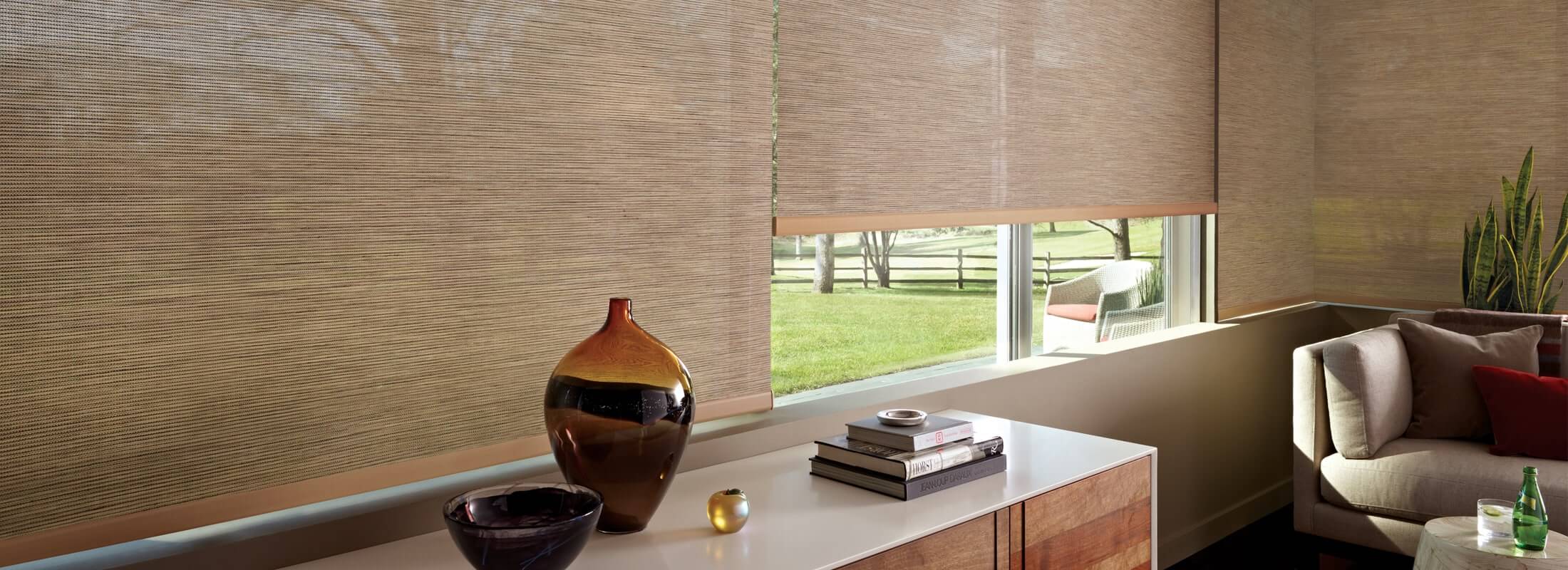
If your bedroom design includes wood elements — say, wooden headboards, flooring, or furniture — selecting roller shade fabrics in warm tones like taupe, warm gray, or earthy neutrals can harmonize the room’s aesthetic and maintain a cozy, grounded feel.
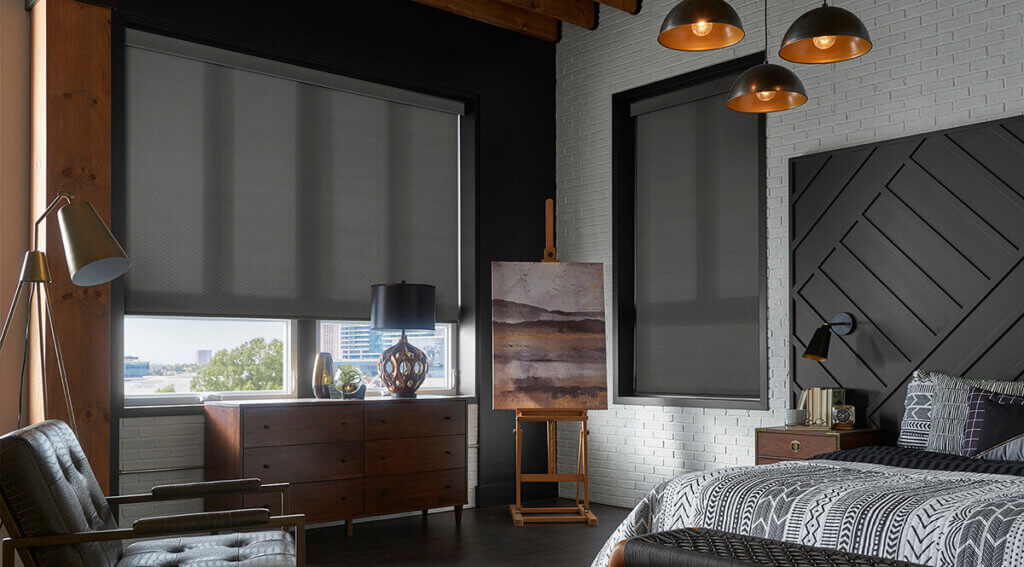
For a more modern or urban look (common in suburbs or city homes in Denver, Littleton, or Greenwood Village), cooler shades such as charcoal, slate, or soft gray create a clean, minimalist vibe — especially paired with crisp white walls or metal fixtures.
When choosing style, consider how the shade looks when raised and lowered. The clean, discreet roll-up design preserves sightlines and helps maintain uncluttered window frames — ideal for bedrooms where you want simplicity and serenity.
Blackout vs. Room-Darkening: Which Roller Shade Fabric is Right for a Mountain Bedroom?
Understanding the difference between blackout and room-darkening (or “room darkening/light-filtering”) roller shades is key to selecting the right fabric.
- Blackout Roller Shades: These use opaque or lined fabrics that block nearly 95–99% of light. They are the go-to for bedrooms where you want full darkness for sleep, shift-work, or to block early summer sun.
- Room-Darkening / Light-Filtering Shades: These allow a small percentage of light (and some level of visibility) to filter through. They’re good when you prefer a soft, warm glow of daylight rather than total darkness — perhaps for reading or a relaxed afternoon nap.
Here’s a quick comparison:
| Use Case / Need | Blackout Shades | Room-Darkening / Light-Filtering Shades |
| Best for deep sleep, shift workers, early rising summers | Excellent — near-total darkness and privacy | Not ideal — some light will enter |
| Want a softly lit, cozy bedroom during day | Blocks daylight completely when down | Lets soft light in |
| Protecting furniture from sun fade | Excellent — minimal light & UV exposure | Moderate protection, depends on weave |
| Evening privacy when lights are on | Very high — no visibility from outside | Moderate — may be somewhat translucent |
| Maintaining a minimalist, modern look when shade rolled up | Great — clean roll-up discreet profile | Same benefit applies |
For a typical Colorado bedroom, many homeowners opt for blackout roller shades — especially in master bedrooms, guest rooms, or kids’ rooms where sleep quality matters. Room-darkening options may work well for spare bedrooms, reading nooks, or rooms with south-facing windows where some natural light is desired.
What Are the Pros and Cons of Roller Shades for Bedrooms?
It’s helpful to look at both sides, so you know exactly what to expect. Here are some of the typical pros and cons of using roller shades in bedrooms.
Pros:
- Excellent light control — from full blackout to soft light filtering depending on fabric choice.
- Improved sleep quality and privacy — especially with blackout options.
- Simple, modern aesthetic — a clean, flat appearance that works with many interior styles.
- Easy to operate and maintain — smooth rolling mechanism, minimal dusting or cleaning needed.
- Energy efficiency & UV protection — helps reduce heat gain/loss and protects furniture from sunlight damage.
- Affordability relative to heavy drapes or custom wood blinds — good value for functionality, style, and comfort.
Cons / Things to Keep in Mind:
- Roller shades may offer less insulation than honeycomb or cellular shades, so extreme temperature swings might not be as effectively buffered.
- If poorly measured or installed, gaps around the edges can let light in (and reduce energy efficiency).
- Light-filtering fabrics provide less privacy at night, especially when interior lights are on.
- Unusual window shapes (arched, circular, or custom shapes) may require specialized solutions that roller shades cannot always accommodate.
Weighing these pros and cons against your lifestyle, window orientation, and room function will help you decide whether roller shades are the right choice for your bedroom.
Conclusion: Are Roller Shades the Right Choice for Colorado Bedrooms?
For homeowners in Castle Rock, Parker, Highlands Ranch, and the Denver South suburbs, bedroom roller shades offer a compelling mix of functionality, comfort, and style. They deliver near-total blackout for restful sleep, help moderate temperature and energy use, block harmful UV rays, and provide privacy without sacrificing aesthetics. Their clean, modern lines suit a range of decor styles — from mountain-modern to contemporary suburban.
If you value a dark, quiet, cozy sleep environment — especially given Colorado’s bright daylight and long summer evenings — blackout roller shades are an excellent investment. And if you have tall or hard-to-reach windows, motorized roller shades add convenience and safety.
At the same time, roller shades remain budget-friendly and low-maintenance, making them a practical choice for most bedrooms. Even if you opt for light-filtering versions, they can still deliver a soft ambiance and better daily light control than many alternatives.
If you’re ready to explore roller shade options for your home, feel free to contact us at MITS Denver South. We can help you choose the right fabric, style, and mount type — and ensure precise measurements and installation for the best fit. Let’s make your bedroom a restful, comfortable haven you deserve.